September 15, 2026
Three Sayings, One Lamp: Remembering Liang Yiquan
Liang Yiquan (1931-2026), the Shaolin master who rebuilt modern Shaolin wushu, died on September 14. Three sayings trace the life; one lamp closes the account.
- Author
- GEMAC Archive
- Reading time
- 4 min read
- Tags
- Memorial · Shaolin
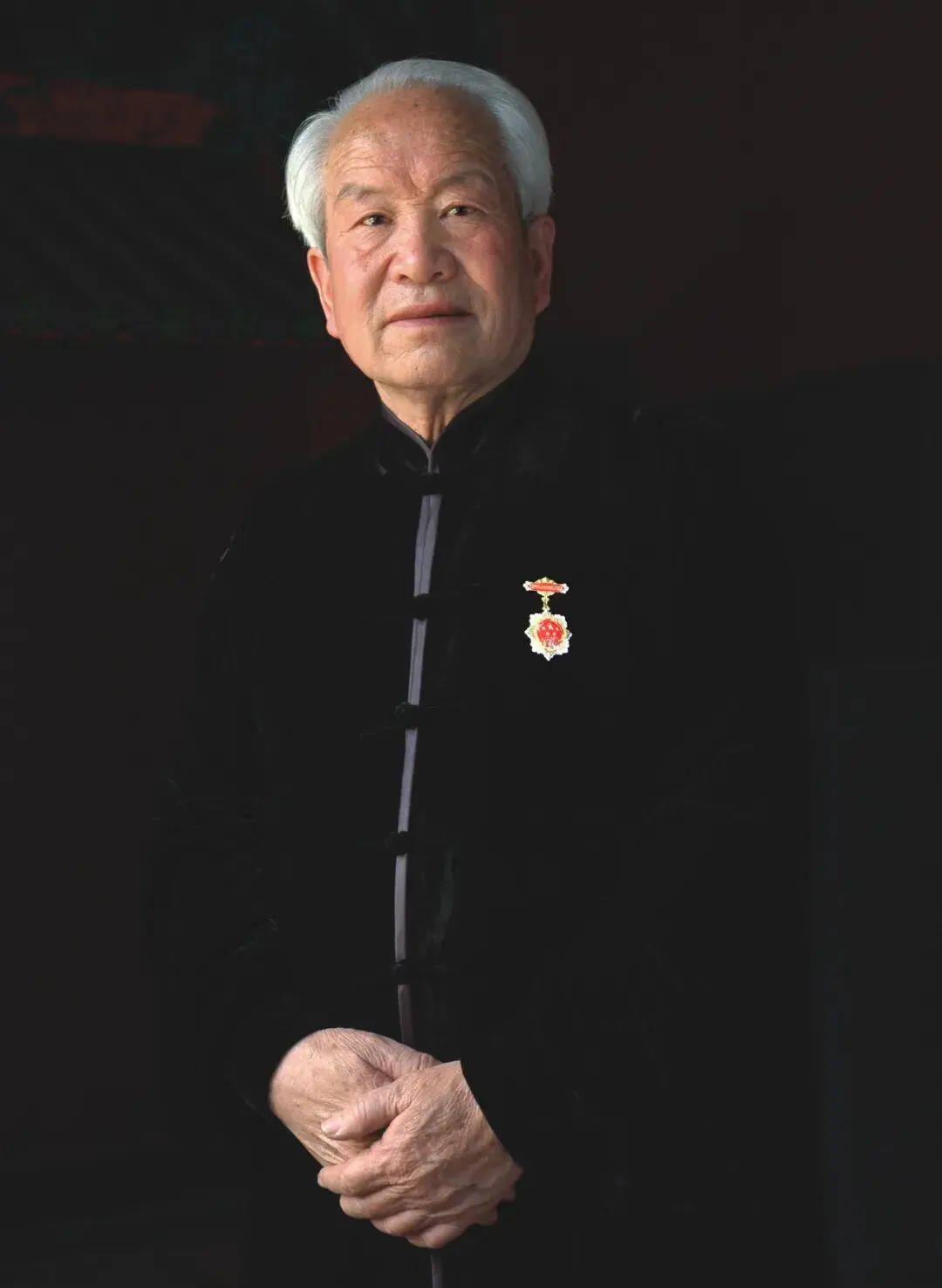
Liang Yiquan (梁以全) died on September 14, 2026, in Dengfeng, Henan province. He was 97 years old, three days past his birthday. He was the teacher who put modern Shaolin wushu back on its feet, and he left behind a documented record rather than a legend. This archive keeps the sourced account of his life, with disputed dates marked as disputed. What follows is the shorter version, built the way his own students built their days: out of three sayings.
The family saying
文无武则馁,武无文则蛮。
Scholarship without arms falters. Arms without scholarship turns crude.
The Liang family of Camel Cliff village has kept this line in its genealogy for sixteen generations, since the family settled at Shaolin’s gate in the fifteenth century. Liang Yiquan was its sixteenth-generation heir: born July 29, 1931, training from early childhood in the village lineage, later taking the lay dharma name Suyi under the abbot Zhenxu, who held the temple through its burned and rebuilt years.
The saying was tested in the darkest way. Misclassified as a rightist in 1957, Liang spent thirteen years — 1964 to 1977 — herding the collective’s sheep on the hills around his village. A boxing teacher with no classroom did what the family saying told him to do: he studied. From 1972 he taught a circle of neighbors’ sons and daughters in six cave rooms by the light of one kerosene lamp, after a full day with the flock, without fee. Twenty-seven teenagers passed through that lamp light. Some became policemen, magistrates, and generals of industry; the record names them.
When his classification was corrected in 1978, the county asked the shepherd to come in from the hills. He was fifty.
The teacher’s saying
习武先习德。
Before learning the fist, learn the virtue that carries it.
This was the monastic instruction Liang received through Zhenxu’s lineage, and it governed the most-watched afternoon of his life. In April 1979 the temple received a Japanese guest, So Doshin, the founder who had taken Shaolin’s name across the sea and now came pilgrimage-dutiful to the source. The reception included a demonstration: the tiger-clash seize and the heart-mind strike, the old temple methods performed at their full seriousness. Visitors who tested a host’s grip in the handshakes afterward left their own records of how that grip answered. The meeting ended in an invitation, and in November 1980 Liang led the first Shaolin martial arts tour abroad, to Japan. The art that had herded sheep was touring.
The saying he printed
以武入禅,以禅导武。
Enter meditation through the fist; let meditation lead the fist back.
Liang wrote this himself in his 1982 manual, and it explains what he built twice over. On July 15, 1981, provincial authorities approved his Dengfeng school — the first professional wushu school of the era, opened in three ruined stone caves. Its rule was the family saying in administrative form: mornings for books, afternoons for fists, at a time when almost every competitor taught fists alone. He held that line through the whole boom it helped start. In December 1995 the national sports community named him one of the ten most influential masters of the century, the only Shaolin teacher on the list. His son and successor, Liang Shaozong, runs the school group he founded at Ebo Ridge — today tens of thousands of students a year, sending graduates into universities, national teams, and the ring: one of the cave lamp’s later students, Yang Jianfang, came out of the school to become a national champion in sanda, the free-fighting discipline the same reform generation rebuilt.
The lamp
One kerosene lamp in a cave, 1972. The lamp moved as the century moved: into a rehabilitated gymnasium in 1978, into three stone caves in 1981, onto steel-mill grounds in 1983, up Ebo Ridge in the 1990s, into a school system that now stands at the foot of the mountain and carries Shaolin’s practice to more than eighty countries.
An archive is not supposed to end with imagery, so let the image be exact. Liang Yiquan died quietly, of his years. The flame he struck for twenty-seven of them in the worst decade of his life is now burning in thousands of rooms he never saw. A lamp is a small, stubborn thing; it goes only where someone carries it. He carried his a very long way.
梁以全先生,一路走好。 Teacher Liang Yiquan, 1931–2026.